Your kitchen is the heart of your home, but it doesn’t have to come at the expense of our planet. If you’re tired of plastic containers that crack, cluttered countertops, and storage solutions that create more waste than they solve, you’re in the right place. These sustainable kitchen storage ideas will help you create an organized, beautiful space while reducing your environmental footprint and saving money in the long run.
The best part? You don’t need to overhaul your entire kitchen overnight. Even small changes toward more eco-friendly kitchen organization can make a significant difference in both your daily routine and your environmental impact. Let’s explore practical, stylish solutions that work for real kitchens and real budgets.
Table of Contents
Why Choose Sustainable Kitchen Storage Solutions?
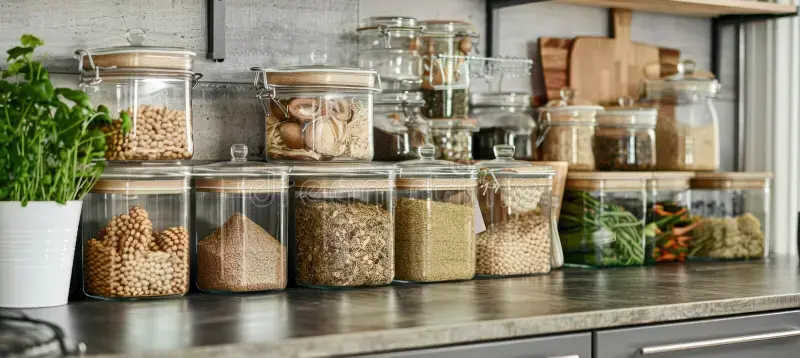
Before diving into specific ideas, it’s worth understanding why sustainable kitchen storage matters. Traditional plastic containers often contain harmful chemicals, break easily, and contribute to the massive plastic waste problem. Meanwhile, sustainable alternatives like glass, bamboo, and reclaimed wood offer durability that actually saves you money over time.
Eco-friendly kitchen organization isn’t just about the materials you choose—it’s about creating green storage solutions that reduce food waste, minimize packaging, and help you maintain a clutter-free space that supports healthy cooking habits. By using minimalist kitchen storage and reusable kitchen containers, your storage works efficiently, making it more likely that you’ll cook at home, buy in bulk to reduce packaging, and fully utilize the fresh ingredients you purchase.
Glass Containers: The Ultimate Zero Waste Kitchen Solutions
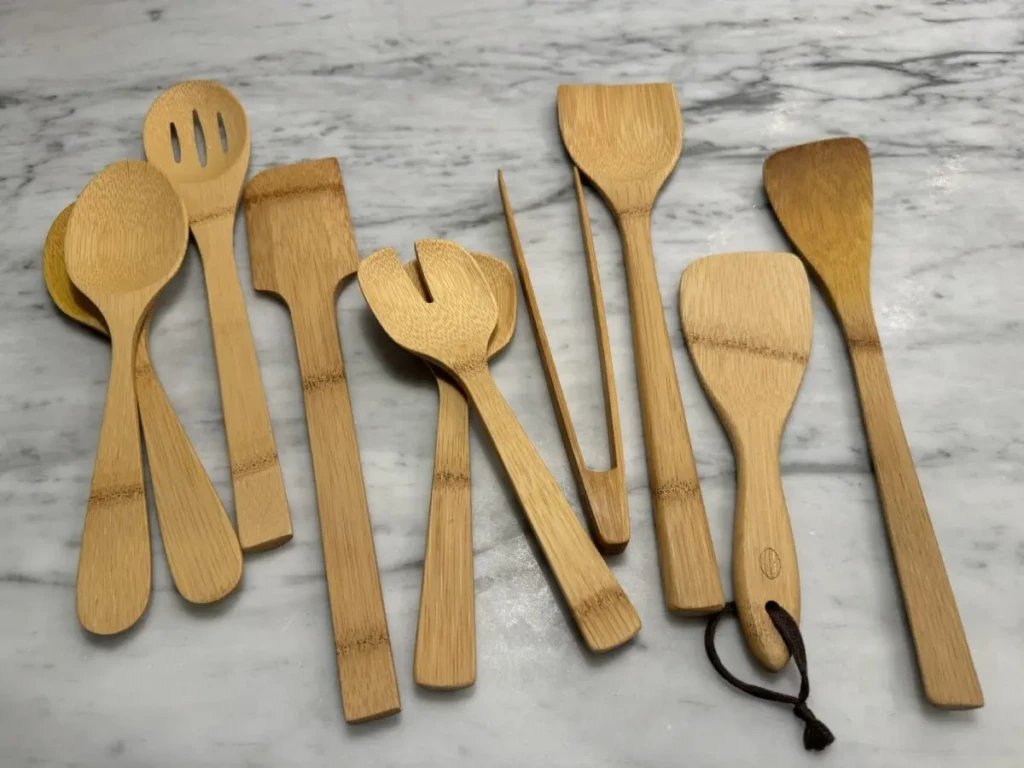
Glass containers are the backbone of any sustainable kitchen storage system. Unlike plastic, glass doesn’t absorb odors, stains, or harmful chemicals, making it perfect for storing everything from leftovers to bulk ingredients.
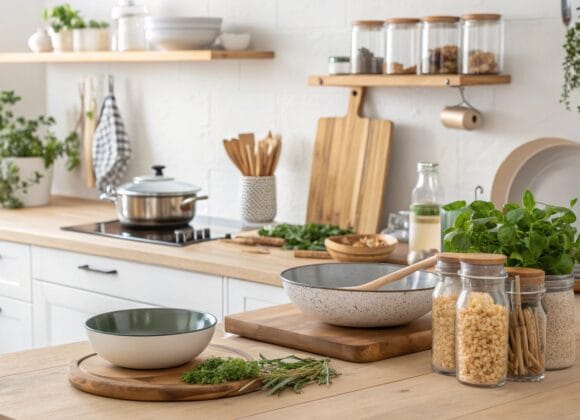
Mason Jars for Maximum Versatility Mason jars aren’t just trendy—they’re incredibly practical. Use quart-sized jars for storing bulk grains, beans, and pasta. Pint jars work perfectly for spices, nuts, and seeds. The clear glass lets you see exactly what you have, preventing duplicate purchases and reducing food waste.
The key to success with glass containers is buying quality pieces that will last for decades. While the initial investment might be higher than plastic alternatives, the longevity and safety make them worthwhile sustainable kitchen storage ideas.
Natural Kitchen Storage Containers That Add Warmth
Before diving into specific ideas, it’s worth understanding why sustainable kitchen storage matters. Traditional plastic containers often contain harmful chemicals, break easily, and contribute to the massive plastic waste problem. Meanwhile, eco-friendly kitchen organization solutions like glass, bamboo, and reclaimed wood offer durability that actually saves you money over time.
Green storage solutions aren’t just about the materials you choose—they’re about creating systems that reduce food waste, minimize packaging, and help you maintain a clutter-free space that supports healthy cooking habits. When your minimalist kitchen storage works efficiently, you’re more likely to cook at home, buy in bulk to reduce packaging, and actually use the fresh ingredients you purchase with reusable kitchen containers.
Maximize Space with Sustainable Shelving and Organizers
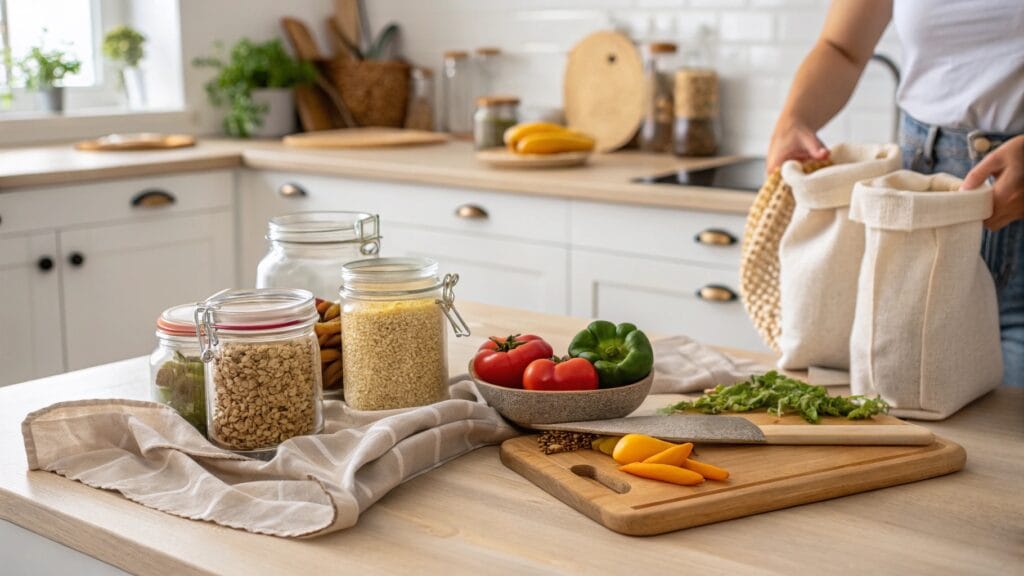
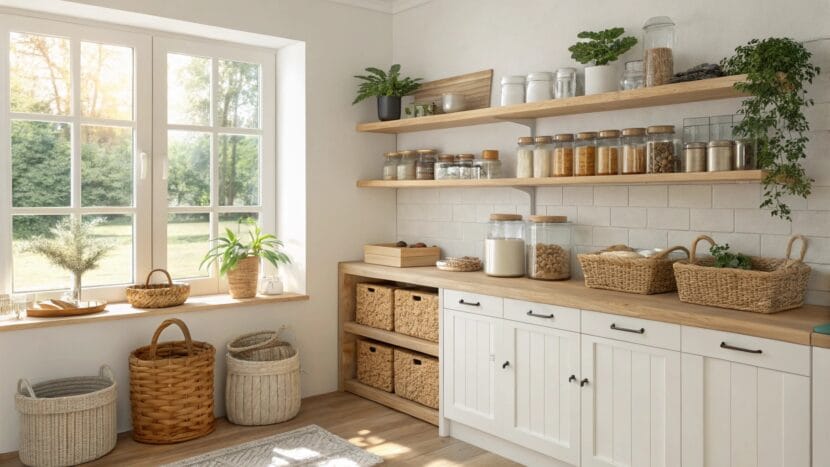
Reclaimed Wood Shelving Open shelving made from reclaimed wood creates additional storage while showcasing your sustainable containers. Reclaimed wood has character that new lumber lacks, and using it prevents perfectly good material from ending up in landfills.
Install floating shelves to display your glass jars and natural containers. This approach keeps frequently used ingredients within easy reach while creating an attractive focal point. Group items by color or size for maximum visual impact.
Metal and Wire Organization Systems Stainless steel and powder-coated wire organizers offer durability without plastic components. Wire shelf inserts can double your cabinet storage capacity, while metal spice racks keep small containers organized and accessible.
Magnetic spice containers made from stainless steel can attach directly to your refrigerator or a magnetic board, freeing up valuable cabinet space. These systems are particularly effective in smaller kitchens where every inch counts.
Creative Upcycling Ideas for Kitchen Storage
Repurpose Glass Jars and Containers Before recycling glass jars from store-bought items, consider their storage potential. Large pickle jars work perfectly for storing bulk items, while small jam jars are ideal for spices and herbs. Remove labels by soaking in warm, soapy water, then scrubbing with a mixture of baking soda and oil.
Transform Vintage Finds into Storage Solutions Thrift stores and estate sales often yield amazing storage pieces. Old bread boxes, wooden crates, and vintage tins can be cleaned up and repurposed for modern kitchen storage needs. A vintage ladder can become a unique pot rack, while old wooden drawers make excellent under-counter organizers.
The key to successful upcycling is seeing potential in unexpected places. That old metal colander might become a perfect hanging fruit basket, or those vintage glass bottles could store homemade vinegars and oils.
Bulk Storage Systems That Reduce Packaging Waste
Gravity-Fed Dispensers Gravity-fed cereal dispensers made from glass or BPA-free materials allow you to buy in bulk and dispense exactly what you need. These systems work particularly well for granola, nuts, and other frequently used items. The airtight seals keep contents fresh while the clear containers let you monitor supply levels.
Large-Scale Container Solutions For families who cook frequently, large glass or stainless steel containers can store significant quantities of flour, rice, and other staples. Look for containers with tight-fitting lids and wide openings for easy access. Wheels on larger containers make them easy to move for cleaning.
These zero waste kitchen solutions work best when positioned in pantries or dedicated storage areas where their size won’t overwhelm your kitchen design.
Maintaining Your Sustainable Storage System
Regular Cleaning and Maintenance Glass and natural materials require different care than plastic alternatives. Clean glass containers with white vinegar and water for a streak-free finish. Wooden items should be oiled periodically to prevent cracking and maintain their appearance.
Seasonal Organization Updates Adjust your storage system seasonally to accommodate different ingredients and cooking patterns. Summer might require more fresh herb storage, while winter calls for increased soup and stew container needs.
Use this natural rhythm to evaluate what’s working and what isn’t in your current system. Don’t be afraid to modify your approach as your cooking habits evolve.
Budget-Friendly Ways to Start Your Sustainable Kitchen Transformation
Phase Your Investment You don’t need to replace everything at once. Start with the items you use most frequently—perhaps a set of glass containers for leftovers or a few mason jars for bulk storage. Add pieces gradually as your budget allows and as you identify specific needs.
Check community groups, online marketplaces, and local buy-nothing groups for gently used storage items. Many people are happy to share quality pieces they no longer need.
Conclusion: Start Small, Think Big
Creating a sustainable kitchen storage system doesn’t happen overnight, but every small change moves you toward a more organized, environmentally friendly space. These sustainable kitchen storage ideas prove that eco-conscious choices can be both practical and beautiful.
Remember, the most sustainable storage solution is one you’ll actually use consistently. Choose options that fit your cooking style, budget, and aesthetic preferences. Your kitchen—and our planet—will thank you for making these thoughtful changes that support both daily convenience and long-term environmental health.
The journey toward complete eco-friendly kitchen organization is a marathon, not a sprint. Take it one container, one shelf, one sustainable choice at a time.